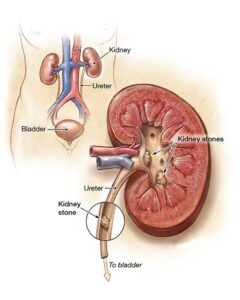
Kidney stones are small crystals made up of mineral salts, uric acid, etc, and normally form inside the kidney, but can migrate to other parts of the urinary tract. While these stones, or mineral deposits, are not harmful, their movement through the ureters can be extremely painful.
Types of kidney stones
- Calcium-based stones are the most common and include, for example, calcium phosphate or calcium oxalate stones. These calcium-based stones normally result from supersaturation of urine due to dehydration, but they can also be caused by diseases of the parathyroid glands, kidneys or intestines.
- Uric acid-based stones, on the other hand, are common in people who eat a diet high in protein, or who suffer from increased uric acid in their blood due to gout or other hematological disorders.
- Struvite stones normally affect those who are prone to recurrent kidney infections. They can grow very large and fill the entire kidney.
- Cystine stones are rare and are caused by the hereditary disorder, cystinuria. Here, the kidney excretes an unusually large amount of certain amino acids.
Symptoms of kidney stones
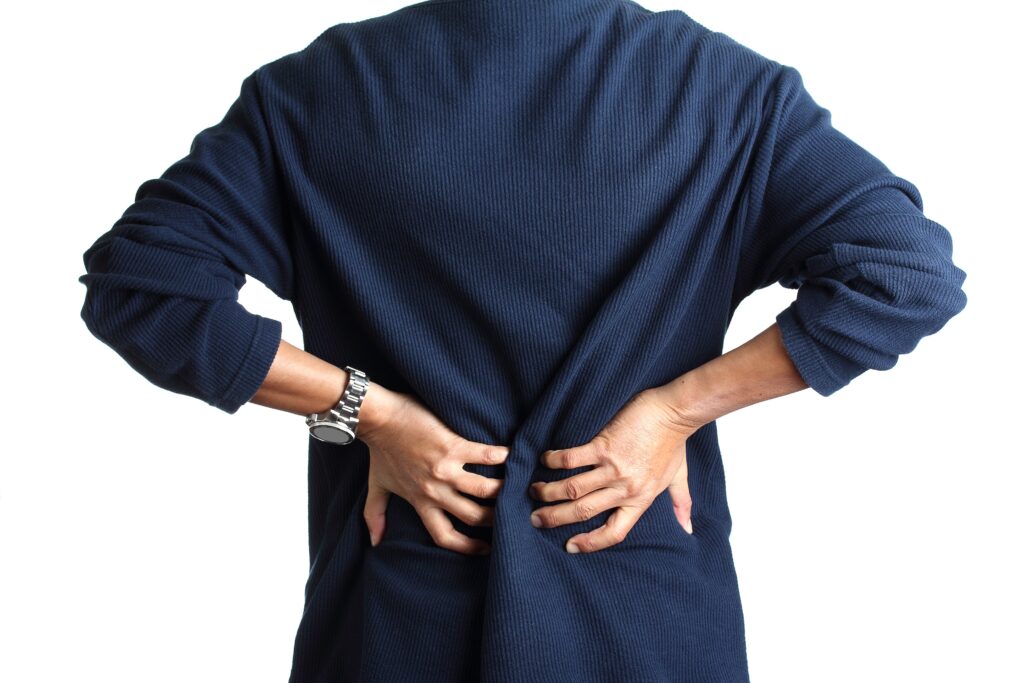
Usually, there are no symptoms of kidney stones and they are detected by chance during scans of the abdomen. However, some are big enough to cause a blockage inside the kidney or they irritate the kidney to the extent that blood begins to appear in the urine. If the kidney stones pass through the ureter, they can cause very severe pain, called renal colic, which is considered to be a medical emergency.
Treatment of kidney stones in Dubai
Shockwave therapy is a non-invasive way to break down kidney stones of up to 2cm using sonic waves. The fragments will then normally leave the body in the urine.
Ureteroscopy and laser fragmentation can be used to clear certain types of kidney and uretric stones and is normally done under general anesthesia with no overnight stay.
PCNL (percutaneous nephro-lithotripsy) is a surgical option where the kidney stones are accessed and fragmented through a small keyhole incision in the back. This method is normally used when there are large or multiple kidney stones.
Open or laparoscopic surgery is less common and is used to remove the kidney in cases where the organ has lost its function or is causing recurring infections.
Book your appointment at Novomed today!
To book an appointment with one of our expert urologists in Dubai or for more information about kidney stones Treatment in Dubai, call us toll-free on 800 (NOVO) 6686 or click the live chat icon at the bottom of the screen.